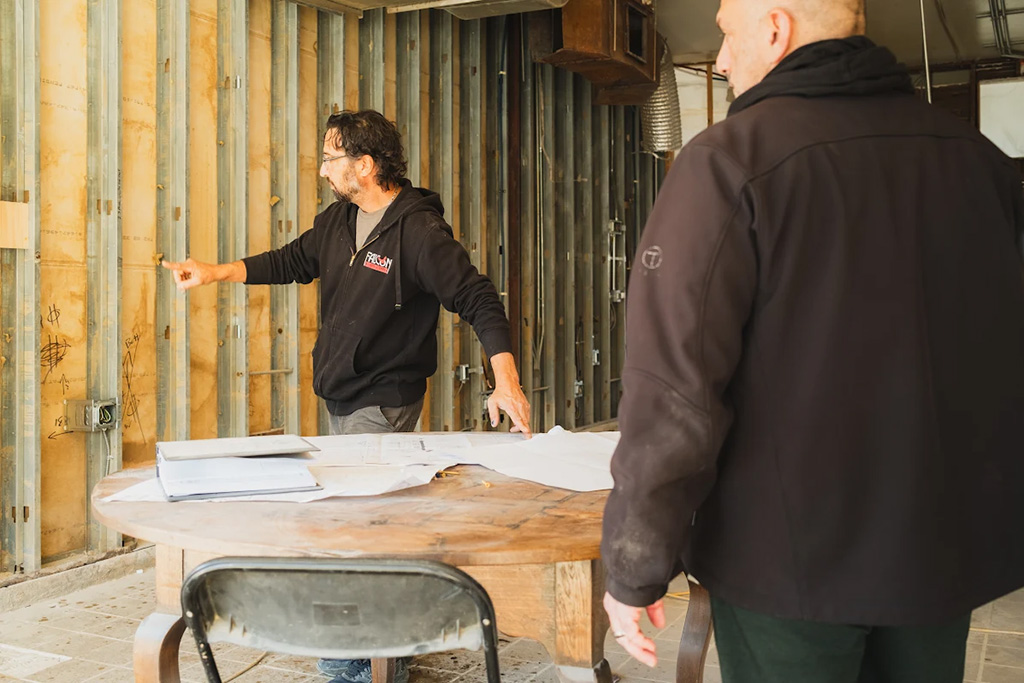
Construction project management involves much more than keeping a project on schedule. Decisions about design, budget, materials, permitting, subcontractors, site conditions, sequencing, and owner priorities all need to stay coordinated from planning through construction.
That’s where an experienced team brings real value. It’s not simply about how many years someone has spent in construction. It’s knowing what to look for, what questions to ask, which decisions need attention, and how a change in one area could affect the rest of the project.
No amount of experience can eliminate uncertainty from construction. What it can do is help a team recognize potential issues, evaluate what’s happening, and make informed decisions about how to move forward.
1. Construction Project Management Is About Connecting the Pieces
A construction project has a lot of moving parts, and they rarely operate independently. The project scope influences the budget. Material selections can affect cost and procurement, which can affect the schedule. A design change may involve multiple trades, while an owner decision made today could affect work that needs to happen weeks later.
Keeping those pieces coordinated is a significant part of construction project management. Depending on the project, that can include managing scope and design coordination, budgets, schedules, permitting and inspections, procurement, subcontractors and trades, owner decisions, site conditions, quality, documentation, and communication.
Managing those responsibilities isn’t simply a matter of checking items off a list. A decision in one area can have consequences somewhere else, which is why individual decisions need to be considered in the context of the project as a whole.
2. Knowing Where to Look Can Make a Difference
No project team can predict every condition or challenge that will arise during construction. What experienced teams develop over time is a better understanding of where questions need to be asked and where an assumption may deserve a closer look.
That could mean investigating an existing condition before plans move forward, identifying equipment with a long lead time, recognizing a potential constructability concern, or realizing that an owner decision is needed before another phase of work can begin. It could also mean looking beyond the immediate issue: Will one trade’s work interfere with another? Does a proposed material change affect installation or sequencing? Is everyone working from the same assumptions?
The goal isn’t to know exactly what will happen. It’s to recognize where uncertainty deserves attention, particularly on complex projects where a seemingly small decision can affect much more than the issue immediately in front of the team.
3. Good Judgment Helps Teams Prioritize Decisions
Construction projects generate a steady stream of questions, information, and decisions, and they don’t all carry the same urgency or impact. Knowing what needs attention now, what can wait, who needs to be involved, and what else could be affected is an important part of managing a project well.
An owner selection involving a long-lead item is a good example. On the surface, the decision may be about a fixture, finish, or piece of equipment. But the timing of that selection could also affect procurement, installation, another trade’s work, or the construction schedule. Similarly, a change in the field may require input from an architect, engineer, subcontractor, owner, or several of them before the team determines how to proceed.
This is also where good communication matters. It’s not simply about providing frequent updates. The right people need the right information when a decision needs to be made, along with an understanding of what that decision could affect.
4. The Right Kind of Experience Matters
Years in the construction industry can tell you something about a contractor or project manager, but they don’t tell the whole story. Different types of projects bring different challenges, which makes relevant experience worth considering.
A restaurant upfit, for example, may involve specialized equipment and utilities, work within an existing building, inspections, and an opening schedule tied to business operations. An adaptive reuse project can bring questions about existing conditions, structural modifications, preservation requirements, and integrating new building systems into an older structure. Ground-up commercial construction introduces its own considerations around site development, engineering, utilities, permitting, procurement, and trade coordination.
The same principle applies to residential work. A custom home or significant residential renovation may involve challenging site conditions, extensive owner selections, specialized finishes, engineering, design coordination, and complex sequencing.
That doesn’t mean a contractor needs to have built your exact project before. When evaluating a construction team, however, it’s worth looking beyond the number of years they’ve been in business and asking whether they’ve managed projects with similar conditions, challenges, and levels of complexity.
5. Managing Changes During Construction
Even a well-planned construction project can change. Existing conditions may be uncovered once work begins, an owner may modify the scope, material availability can shift, weather can affect sequencing, or a design detail may need clarification in the field.
The important question isn’t whether a project will make it from beginning to end without encountering a challenge. It’s how the team responds when one arises.
A change that seems isolated may affect cost, schedule, procurement, design, inspections, or another trade’s work. Depending on the situation, the project manager may need to bring several people into the conversation, evaluate different options, and communicate the implications before a decision is made.
Sometimes the path forward is straightforward; other situations require more investigation or coordination. This is where experience becomes particularly useful: understanding what changed, what else may be affected, and what needs to happen next.
6. The Value of Early Involvement
Construction management doesn’t have to begin when crews arrive on site. During preconstruction, the construction team can review the project while many important decisions are still being developed.
Depending on the project, that may include evaluating constructability, site or existing-building conditions, preliminary budgets, materials and equipment, scheduling, permitting, design coordination, and potential project risks. Questions raised during this stage can be considered while there are still multiple ways to address them.
For example, a constructability concern identified during design can be evaluated with the architect and other project partners before it becomes a field issue. A material with a significant lead time can be discussed before the schedule depends on its arrival. An assumption about an existing building can be investigated before later decisions are built around it.
Preconstruction won’t uncover every issue a project could encounter. Early involvement gives the construction team more time and information to evaluate important decisions before the work is underway.
7. What Should You Look for in a Construction Project Team?
Asking how long a contractor has been in business is a reasonable starting point when evaluating a construction team, but the conversation shouldn’t end there.
Consider asking:
- Has the team managed projects similar to yours?
- Who will actually manage your project day to day?
- When will the project manager become involved?
- How are budget and schedule changes communicated?
- How are owner decisions documented and tracked?
- How does the team coordinate with architects, engineers, subcontractors, and suppliers?
- How are unexpected conditions or changes handled?
- What tools or processes are used to keep project information organized?
- Can the team explain challenges they’ve encountered on past projects and how they responded?
Those answers can give you a better sense of how the team approaches decisions, coordinates the people involved, communicates changes, and responds when conditions don’t match the original plan.
Experienced Construction Project Management in Asheville
Every construction project involves decisions and variables. Experienced project management brings judgment to those moments, helping the team recognize what needs attention, understand how decisions connect, and evaluate options when conditions change.
Falcon Construction’s project managers, site supervisors, and preconstruction team work together from early planning through construction. Falcon’s experience includes commercial construction, renovations and upfits, adaptive reuse and historic restoration, development, custom homes, and residential renovations throughout Asheville and Western North Carolina.
Planning a commercial construction project? Contact Falcon Construction to start the conversation.
{
"@context": "https://schema.org",
"@graph": [
{
"@type": "BlogPosting",
"@id": "https://falconbuilt.com/blog/how-to-budget-for-a-commercial-construction-project/#article",
"url": "https://falconbuilt.com/blog/how-to-budget-for-a-commercial-construction-project/",
"mainEntityOfPage": {
"@type": "WebPage",
"@id": "https://falconbuilt.com/blog/how-to-budget-for-a-commercial-construction-project/"
},
"headline": "How to Budget for a Commercial Construction Project",
"description": "Learn how to budget for a commercial construction project, including scope, site conditions, allowances, contingency, scheduling, and cost tracking.",
"image": {
"@type": "ImageObject",
"url": "REPLACE-WITH-FEATURED-IMAGE-URL"
},
"datePublished": "2026-09-02",
"dateModified": "2026-09-02",
"author": {
"@type": "Organization",
"@id": "https://falconbuilt.com/#organization",
"name": "Falcon Construction and Development",
"url": "https://falconbuilt.com/"
},
"publisher": {
"@type": "Organization",
"@id": "https://falconbuilt.com/#organization",
"name": "Falcon Construction and Development",
"url": "https://falconbuilt.com/"
},
"articleSection": "Commercial Construction",
"keywords": [
"commercial construction budget",
"commercial construction budgeting",
"commercial construction costs",
"commercial contractor Asheville NC",
"commercial construction Asheville NC",
"construction allowances",
"construction contingency",
"preconstruction planning"
],
"about": [
{
"@type": "Thing",
"name": "Commercial construction budgeting"
},
{
"@type": "Thing",
"name": "Preconstruction planning"
},
{
"@type": "Place",
"name": "Asheville, North Carolina"
}
],
"inLanguage": "en-US"
},
{
"@type": "BreadcrumbList",
"@id": "https://falconbuilt.com/blog/how-to-budget-for-a-commercial-construction-project/#breadcrumb",
"itemListElement": [
{
"@type": "ListItem",
"position": 1,
"name": "Home",
"item": "https://falconbuilt.com/"
},
{
"@type": "ListItem",
"position": 2,
"name": "Blog",
"item": "https://falconbuilt.com/blog/"
},
{
"@type": "ListItem",
"position": 3,
"name": "How to Budget for a Commercial Construction Project",
"item": "https://falconbuilt.com/blog/how-to-budget-for-a-commercial-construction-project/"
}
]
}
]
}