Archives for October 2026

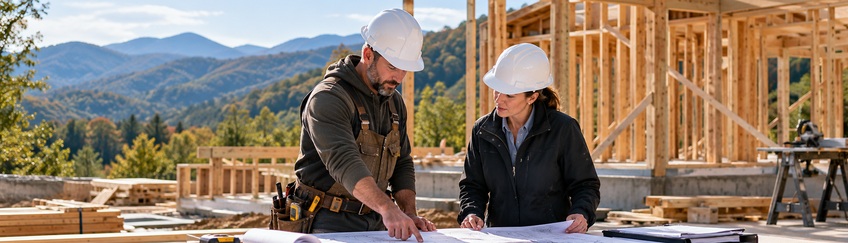
wo people going over plans at a construction site

Permitting and Inspections in Asheville and Western North Carolina: What Property Owners Should Expect

Permitting and inspections rarely make it into the exciting part of a construction project, but they shape the timeline more than almost anything else. Understanding how the process works — and where delays typically come from — helps property owners set realistic expectations from day one.

Why Permitting Matters More Than It Seems

Every construction or renovation project in Asheville and the surrounding Western North Carolina communities has to move through a permitting process before work can begin, and through a series of inspections as it progresses. Skipping or rushing this step isn’t an option — it’s what confirms a project meets safety, structural, and code requirements. But for owners who haven’t been through it before, the process can feel opaque.

What the Process Generally Involves

While requirements vary by municipality and project type, most projects move through some version of the following:

✔️ Plan review and permit application — submitting designs for review against current building codes

✔️ Zoning confirmation — verifying the intended use is allowed on the property

✔️ Permit issuance — approval to begin work

✔️ Scheduled inspections at key milestones — foundation, framing, mechanical/electrical/plumbing, and final

✔️ Final approval and certificate of occupancy, where applicable

Each of these steps depends on the ones before it. A delay at plan review pushes back every inspection that follows.

Where Delays Typically Come From

A few of the most common causes of permitting delays we see:

✔️ Incomplete or unclear plan submissions that require revisions

✔️ Zoning questions that weren’t resolved before design began

✔️ Scope changes discovered once work is underway (especially common on renovation and historic projects)

✔️ Inspection scheduling — particularly during busy seasons when inspector availability is limited

✔️ Missing documentation for specialty systems or historic properties

Anticipating these earlier rather than reacting to them later is one of the more overlooked parts of keeping a project on schedule.

What This Means for Your Timeline

Permitting and inspections aren’t a single line item — they’re threaded through the entire project schedule. Building in realistic time for plan review, and flagging early on anything likely to raise questions (a zoning variance, a change of use, a historic property), helps avoid the kind of open-ended delays that frustrate owners and stall a budget.

How Falcon Approaches This

We build permitting and inspection timelines into project planning from the start rather than treating them as a formality to get through. That means flagging zoning or code questions before they become obstacles, preparing complete documentation the first time, and keeping property owners informed at each milestone — not just when something goes wrong.

Planning a construction or renovation project in Asheville or Western North Carolina and want a clearer picture of what the permitting process will look like for your property? We’d welcome the conversation.
Permitting and Inspections in Asheville, NC | Falcon { "@context": "https://schema.org", "@type": "BlogPosting", "@id": "https://falconbuilt.com/permitting-and-inspections-in-asheville-nc-what-to-expect/#article", "mainEntityOfPage": { "@type": "WebPage", "@id": "https://falconbuilt.com/permitting-and-inspections-in-asheville-nc-what-to-expect/" }, "url": "https://falconbuilt.com/permitting-and-inspections-in-asheville-nc-what-to-expect/", "headline": "Permitting and Inspections in Asheville and Western North Carolina: What Property Owners Should Expect", "description": "Learn what to expect from construction permitting and inspections in Asheville and Western NC, including project milestones, common delays, and planning tips.", "image": "BLOG_IMAGE_URL", "inLanguage": "en-US", "author": { "@type": "Organization", "name": "Falcon Construction and Development", "url": "https://falconbuilt.com/" }, "publisher": { "@type": "Organization", "name": "Falcon Construction and Development", "url": "https://falconbuilt.com/" }, "articleSection": "Construction Planning", "about": [ { "@type": "Thing", "name": "Construction permitting" }, { "@type": "Thing", "name": "Building inspections" }, { "@type": "Place", "name": "Asheville, North Carolina" }, { "@type": "Place", "name": "Western North Carolina" } ] }

Read more
Historic Restoration Building

Historic Restoration and Adaptive Reuse in Asheville, NC: Giving Older Buildings a New Purpose


Asheville is full of buildings that have outlived their original purpose but not their potential. A century-old commercial storefront, a mill building repurposed for offices, a flood-damaged property waiting for its next chapter — these structures carry character that new construction can’t replicate, along with a set of challenges that require a different kind of construction expertise.

At Falcon Construction and Development, historic restoration and adaptive reuse make up a meaningful part of our work throughout Asheville and Western North Carolina. Here’s what property owners should understand before taking on a project like this.

What Makes These Projects Different

Restoring or repurposing an existing structure isn’t simply construction in reverse. It starts with understanding what’s actually there — structural condition, code compliance, hidden systems, and the layers of history (and sometimes surprises) inside the walls. That discovery phase shapes everything that follows: scope, budget, and timeline.

A few of the considerations that come up on nearly every historic or adaptive reuse project:

✔️ Structural assessment — what’s sound, what needs reinforcement, and what has to be replaced

✔️ Code compliance for current use — especially when a building is changing from one purpose to another (residential to commercial, for example)

✔️ Preserving character-defining features — facades, materials, and details worth protecting

✔️ Updating systems — electrical, plumbing, and mechanical brought up to current standards without compromising the structure

✔️ Sequencing work around what you find — historic buildings rarely reveal everything up front

A Project in Progress: 12 Brevard

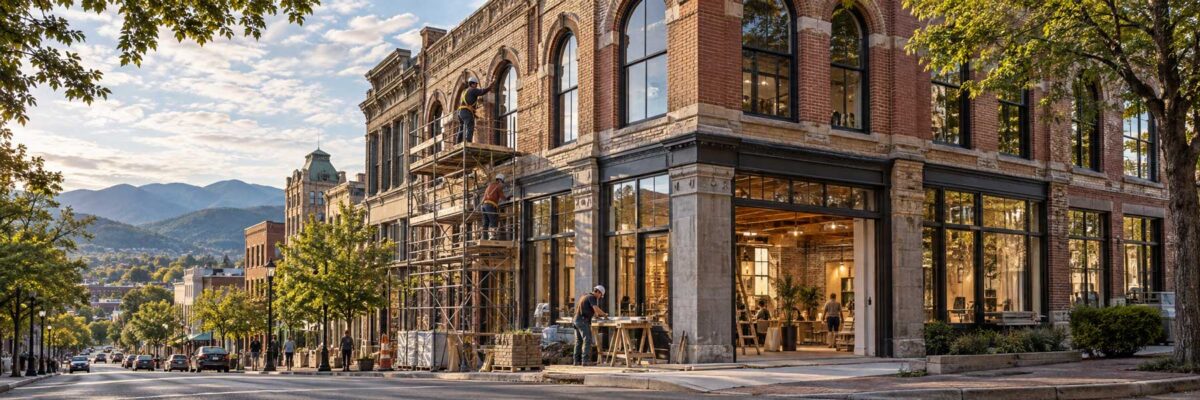
We’re currently working on 12 Brevard, a commercial building more than 100 years old, being transformed into three functional commercial spaces. Projects like this reinforce a pattern we see often: the building tells you what it needs once work begins, and the plan has to be able to adapt without losing momentum or budget discipline.

When Restoration Meets Disaster Recovery: Gemelli

Not every adaptive reuse project starts from a place of opportunity. Gemelli, our restaurant build-out in Biltmore Village, began after more than 11 feet of floodwater from Hurricane Helene devastated the property. What followed combined historic restoration with a complete restaurant upfit — preserving the character of a building that has stood for more than a century while rebuilding it into something new. The project was later recognized with a 2026 Griffin Award, shared with the many partners who helped bring the Biltmore Village landmark back.

Why Existing Buildings Are Worth a Second Look

New construction isn’t always the better answer, especially in a market like Asheville where character, location, and zoning history can be difficult or impossible to replicate. Adaptive reuse and historic restoration can offer:

✔️ Character and history a new building can’t provide

✔️ A head start on location and zoning that would be difficult to secure otherwise

✔️ A sustainability advantage — reusing structural material rather than starting over

✔️ Often (though not always) a faster path than ground-up construction in tightly zoned areas

Our Approach

Whether it’s a historic commercial building being adapted to a new use or a property recovering from storm damage, the same principles apply: transparent budgeting as scope becomes clearer, open communication as decisions come up, and coordination across the trades and specialists these projects require.

Considering a restoration or adaptive reuse project in Asheville or Western North Carolina? We’d welcome the conversation.

falconbuilt.com/contact-us/

Historic Restoration and Adaptive Reuse in Asheville, NC { "@context": "https://schema.org", "@type": "BlogPosting", "mainEntityOfPage": { "@type": "WebPage", "@id": "https://falconbuilt.com/historic-restoration-and-adaptive-reuse-in-asheville-nc-giving-older-buildings-a-new-purpose/" }, "headline": "Historic Restoration and Adaptive Reuse in Asheville, NC", "description": "Learn how historic restoration and adaptive reuse projects in Asheville, NC preserve character, update older buildings, and create new commercial opportunities.", "image": [ "https://falconbuilt.com/wp-content/uploads/2026/10/falcon-historic-restoration-adaptive-reuse-hero-1900x600.jpg" ], "author": { "@type": "Organization", "name": "Falcon Construction and Development", "url": "https://falconbuilt.com/" }, "publisher": { "@type": "Organization", "name": "Falcon Construction and Development", "url": "https://falconbuilt.com/", "logo": { "@type": "ImageObject", "url": "https://falconbuilt.com/wp-content/uploads/2024/01/falcon-logo.png" } }, "datePublished": "2026-10-06", "dateModified": "2026-10-06", "articleSection": "Historic Restoration", "keywords": [ "historic restoration Asheville NC", "adaptive reuse Asheville NC", "historic renovation Asheville", "commercial restoration Asheville NC", "adaptive reuse construction Asheville", "Falcon Construction and Development" ], "about": [ { "@type": "Thing", "name": "Historic Restoration" }, { "@type": "Thing", "name": "Adaptive Reuse" }, { "@type": "Place", "name": "Asheville, North Carolina" } ] }
Read more